Secondhand smoke, also called environmental tobacco smoke, is a combination of smoke from the burning end of a cigarette and the smoke exhaled by smokers. Exposure to secondhand smoke occurs when a tobacco product is smoked in an enclosed area or around another individual.
Secondhand smoke contains more than 7,000 chemicals, and at least 70 of them are known to cause cancer.
In adults who have never smoked, secondhand smoke can cause heart disease, lung cancer, and stroke. Secondhand smoke caused an estimated 34,000 heart disease deaths and 7,300 lung cancer deaths each year from 2005 to 2009.
Virtually everyone faces some risk of harm from secondhand smoke. In a CDC study, 99% of nonsmokers were found to have measurable amounts of cotinine (a chemical the body metabolizes from nicotine) in their bodies.
People with chronic conditions are more likely than healthy people to suffer when exposed to secondhand smoke. Secondhand smoke can aggravate allergies, asthma symptoms, and cause other respiratory and lung conditions.
People spend the majority of their time at home and work. The Nevada Clean Indoor Air Act has reduced the exposure many Nevadans are subject to in the workplace, but there are still many people working in casinos and other exempt locations that suffer daily exposure to secondhand smoke.
For any environment, the level of harm from exposure depends on total time spent in the environment and the amount of smoke in that air space. Smoke-free workplace laws and voluntary smoke-free home pledges help to reduce the health risks of secondhand smoke.
Secondhand smoke is especially dangerous to children because their lungs are still developing. Studies show that older children whose parents smoke get sick more often and have poorer lung function than children who are not exposed.
In children, secondhand smoke causes the following:
If you are a child care provider, learning to recognize, reduce, or eliminate potential asthma triggers in your center could make a huge difference in the life of a child with asthma and other respiratory conditions. Download the Asthma & Common Triggers PDF (103 KB) fact sheet to learn more.
The Nevada Clean Indoor Air Act requires all child care facilities with five or more children to be smoke-free. If you are a child care provider with less than five children, consider the following tips for making your child care facility tobacco-free:
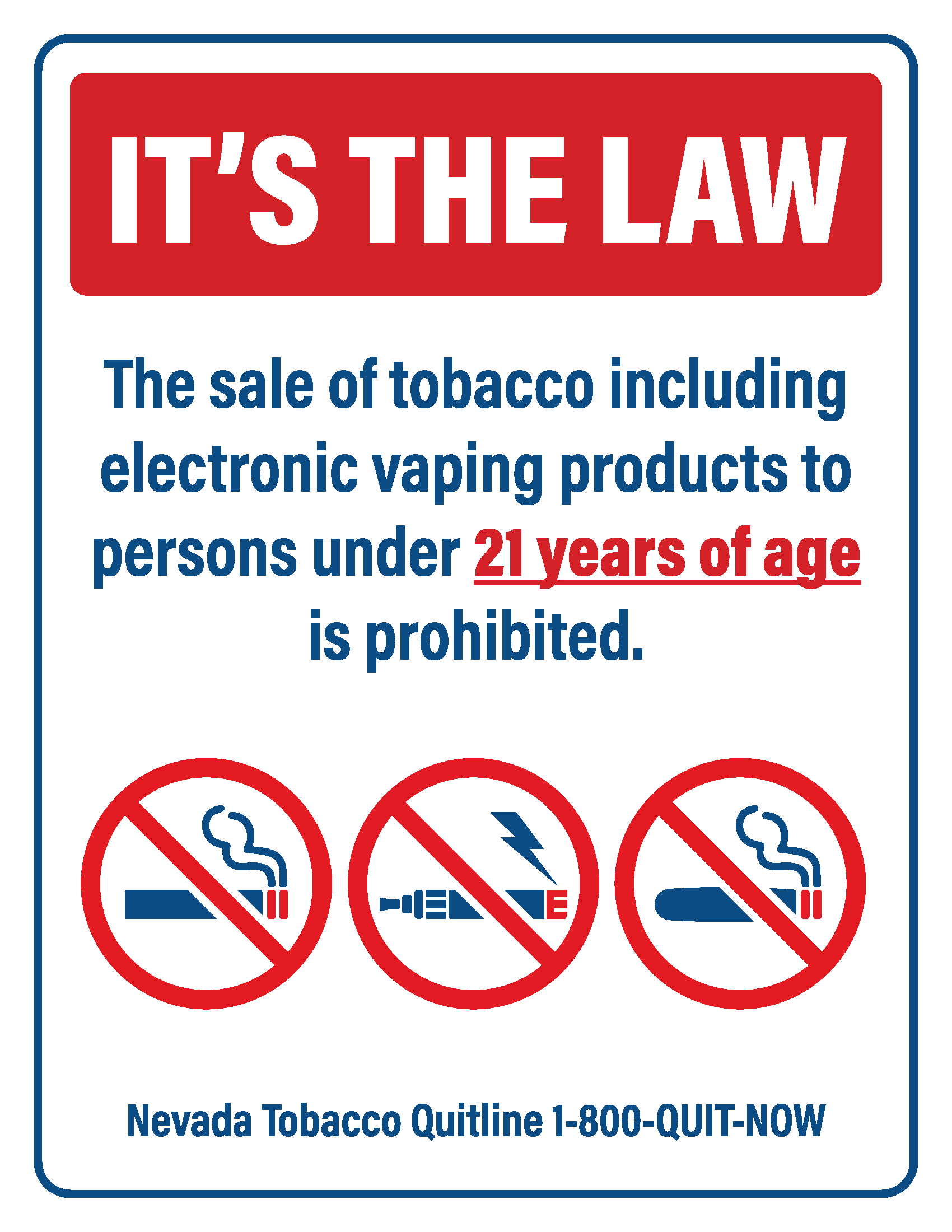
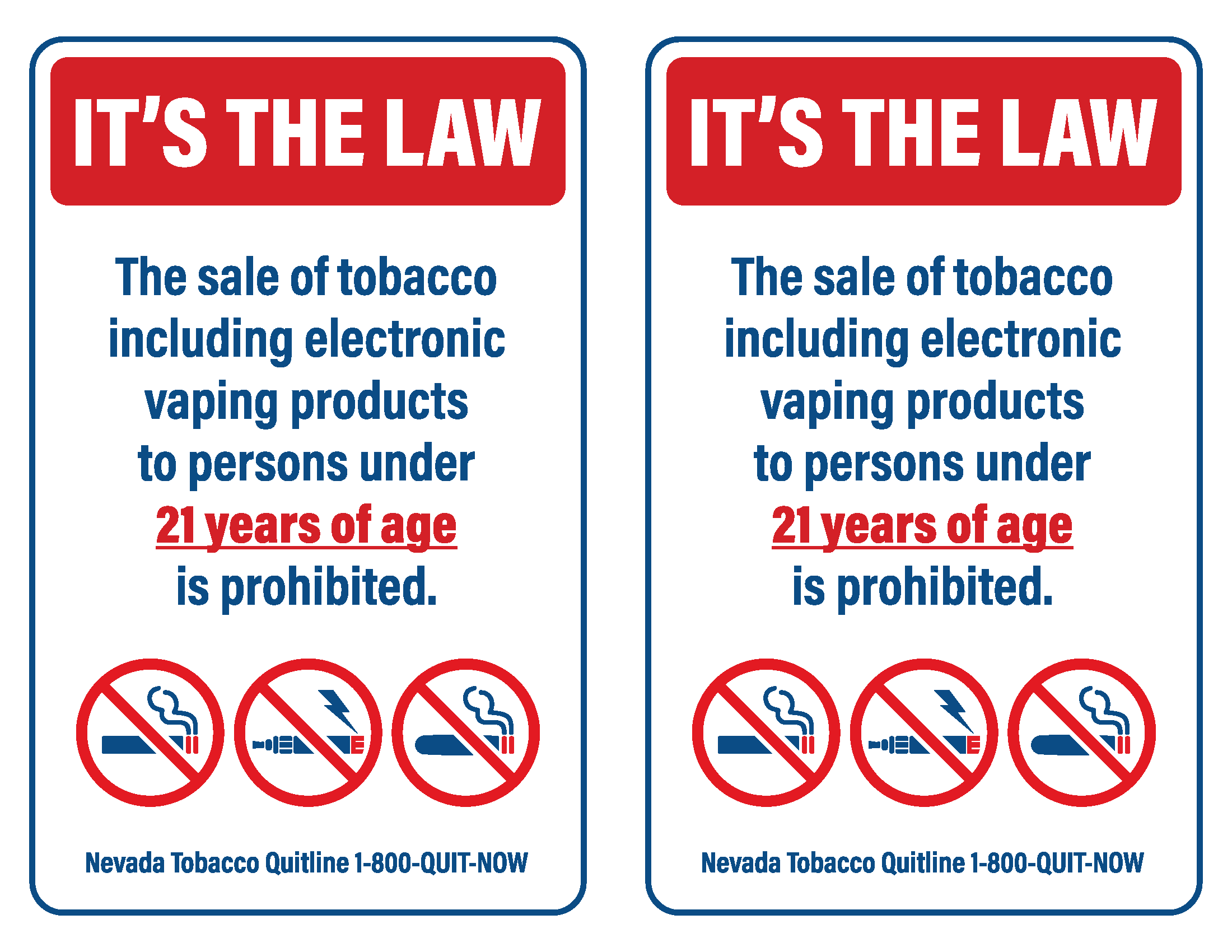
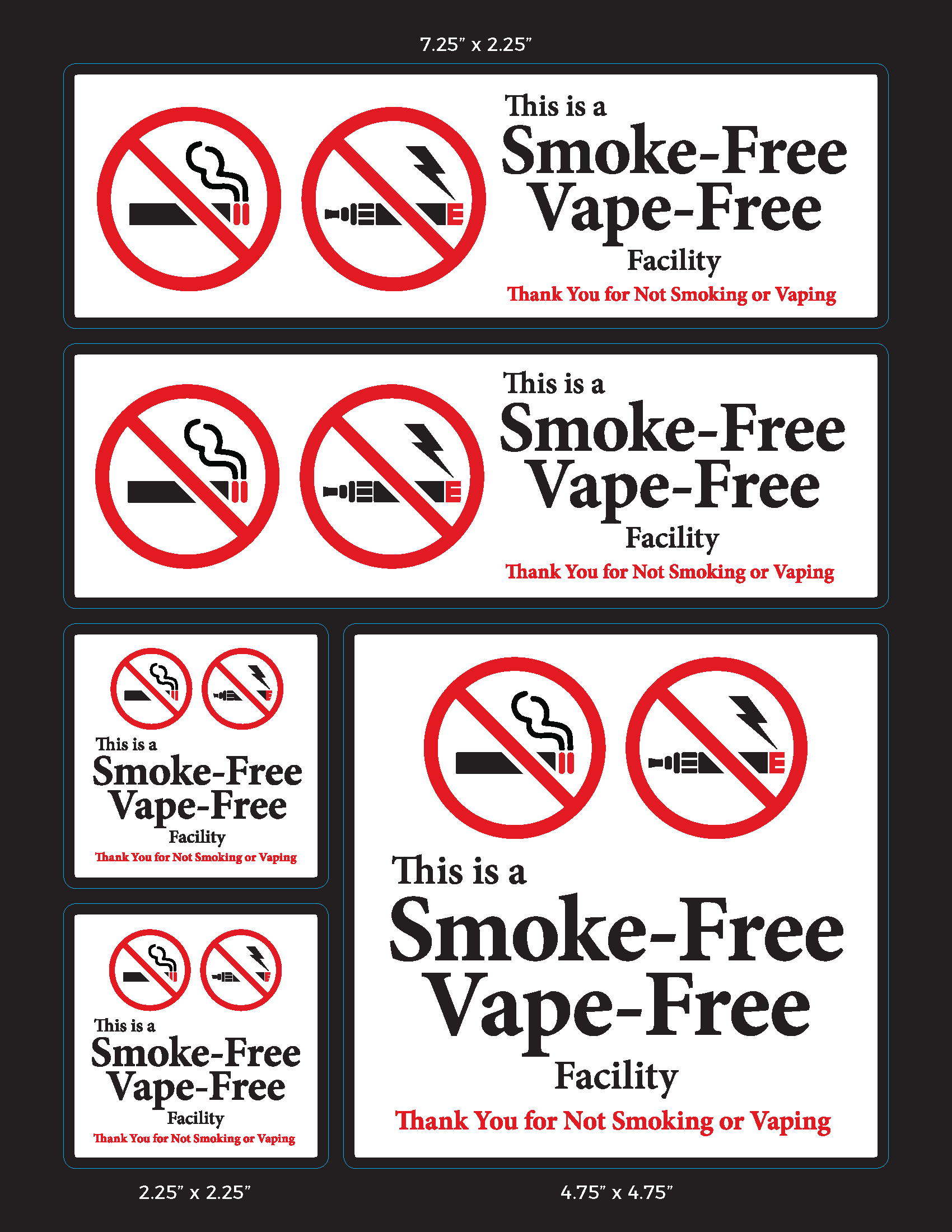
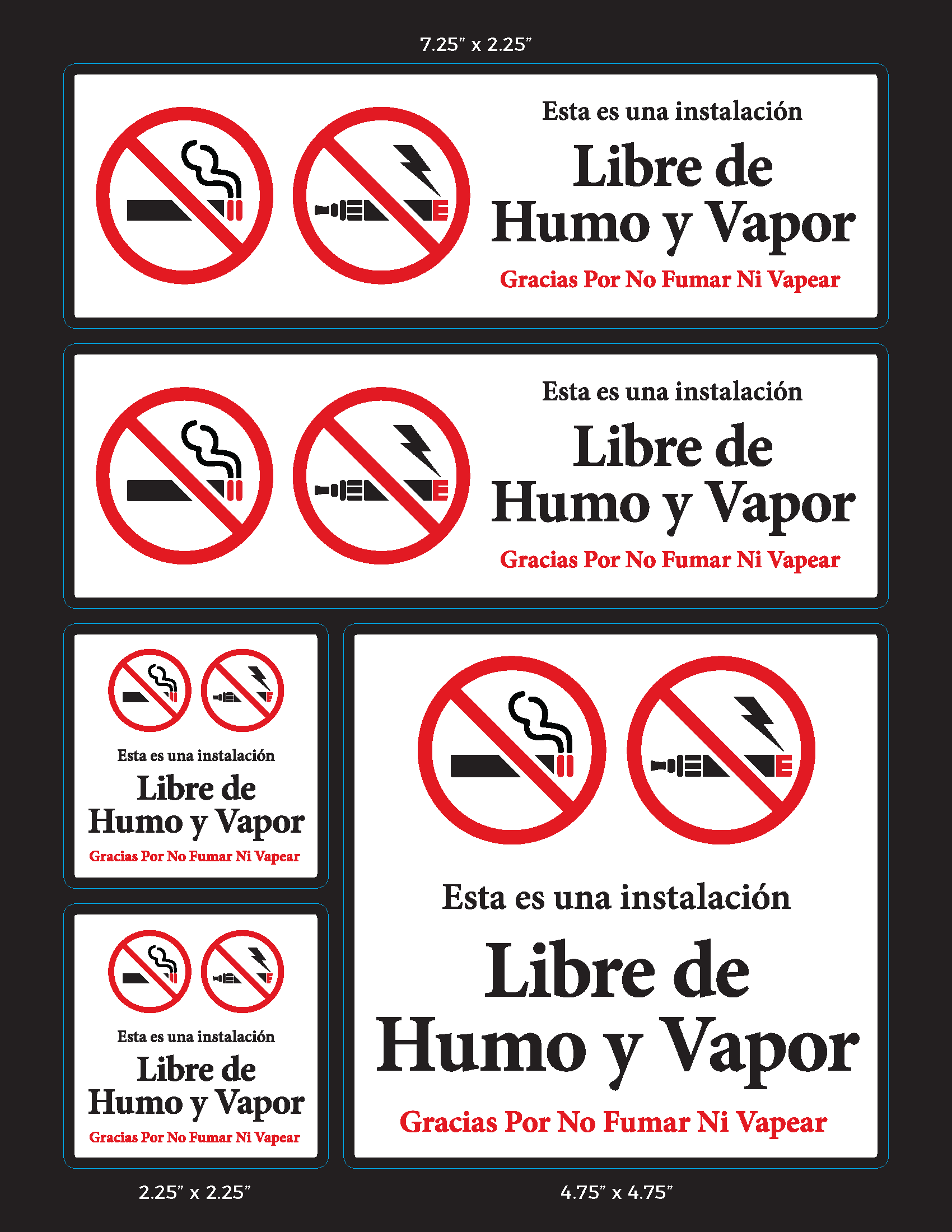
Download a smoke-free childcare facility sign to post in your childcare center or call (702) 759-1270 to request FREE copies of any sign shown below.


The Nevada Clean Indoor Air Act protects children and adults from secondhand cigarette smoke and secondhand aerosol from electronic vaping products in most indoor public places and indoor places of employment.
The Nevada Clean Indoor Air Act was originally passed by a majority of Nevada voters on November 7, 2006. State legislators made substantial changes to the Act during the 2011 session, including allowing smoking to resume in stand-alone bars that do not allow minors. During the 2019 legislative session the law was updated to include vapor products or e-cigarettes in the Nevada Clean Indoor Air Act.
The use of tobacco products, electronic vaping products is only allowed in the following public indoor places:
These establishments or venues may choose to implement voluntary “No Smoking/No Vaping” policies. For more information on implementing a policy at your establishment email tobaccoprogram@snhd.org or call 702-759-1270. Establishments can order FREE signage as well. FREE signs are only available for businesses located in Southern Nevada (Clark County).
The Southern Nevada Health District has published guides for business and the general public to help them understand the law better and understand how it affects them.
Download the guides below:
A Guide for Employers
A Guide for Bars and Restaurants
A Guide to Child Care Facilities
A Guide for the Public
To report violations of the Nevada Clean Indoor Air Act, complete the NCIAA Complaint Form or call (702) 759-1990.
NCIAA Complaint FormFor more information on the smoking and tobacco laws in Nevada, refer to Nevada Revised Statute (NRS) 202.2483, and the Nevada Clean Indoor Air Act.
The law protects the public from secondhand cigarette smoke and secondhand aerosol from e-cigarettes or vaping products. Secondhand smoke, also called environmental tobacco smoke, is a combination of smoke from the burning end of a cigarette, cigar, or pipe and the smoke exhaled by smokers. The U.S. Environmental Protection Agency reports that secondhand smoke contains more than 4,000 substances, many of which are known to cause cancer in humans.
The use of electronic vaping products, and smoking tobacco in any form is prohibited within most indoor places of employment including:
Smoking and the use of electronic vaping products is permitted in:
Smoking and the use of electronic vaping products in all indoor places of employment is prohibited, unless the business is specifically exempted by the law.
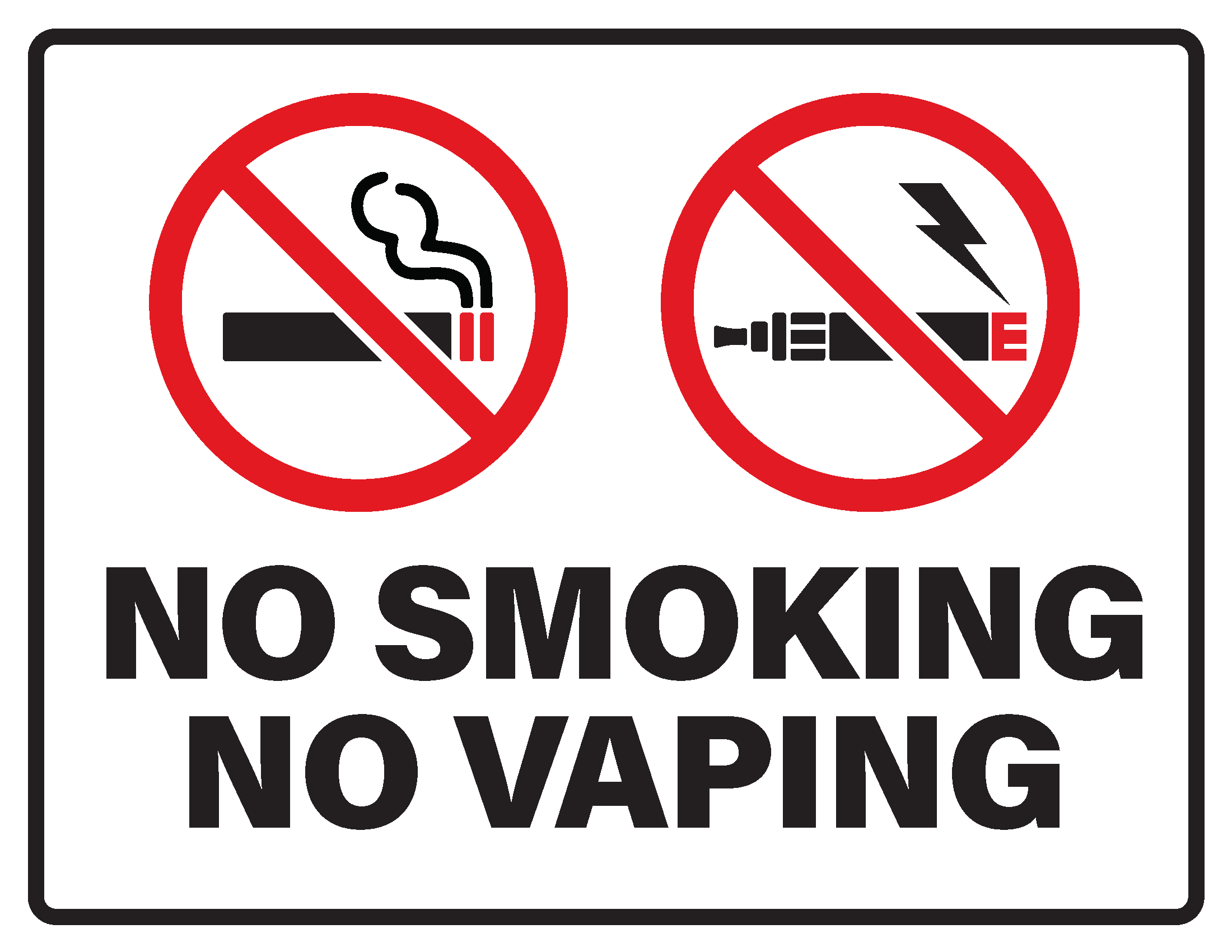
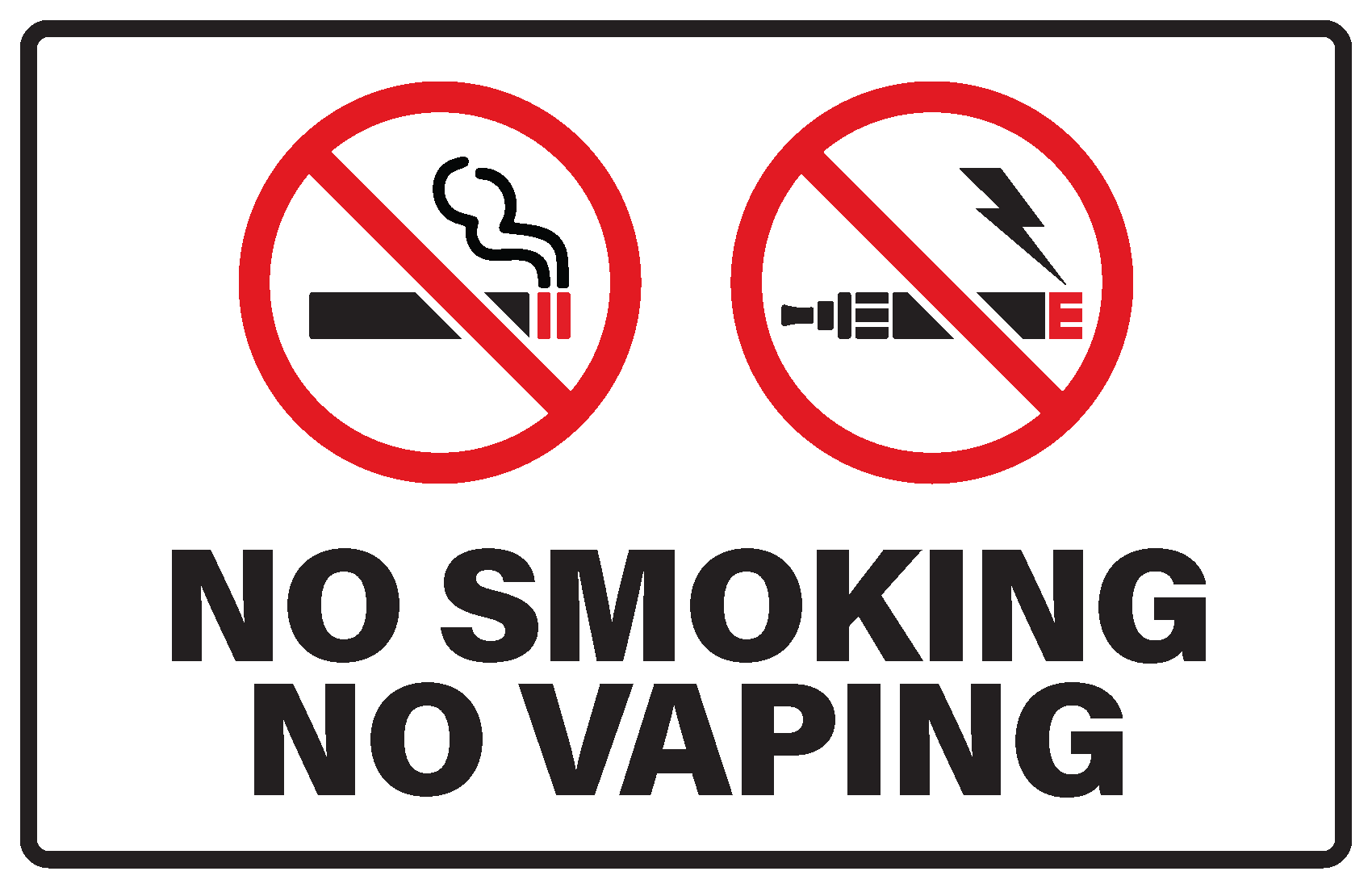
Employers must post conspicuous “No Smoking” and “No Vaping” signs at every entrance. Non-exempt businesses must keep smoking or electronic vaping paraphernalia, including items to be used as ash receptacles, from areas where smoking and the use of electronic vaping products is prohibited and inform smoking customers or clients that smoking, and the use of electronic vaping products is not allowed.
Order FREE “No Smoking” and “No Vaping” signs.
The Nevada Clean Indoor Air Act does not apply to gaming areas of casinos. Smoking and vaping are still allowed in these areas; however, a casino operator can designate separate rooms or areas within the establishment as nonsmoking or nonvaping. For example, many casinos now voluntarily offer smoke-free poker rooms.
Areas of casinos that are not in the gaming area are required to be smoke-free and vape-free. These areas include restaurants, bars in which patrons under 21 years of age are not allowed to enter, shopping malls, retail establishments, concert halls, theaters, some convention areas, etc.
All indoor areas of restaurants are required to be smoke-free and vape-free. Smoking and the use of electronic vaping products is still allowed in outdoor areas of restaurants. Restaurants contained within gaming establishments or casinos are also required to ban smoking and the use of electronic vaping products. Stand-alone bars, taverns, and saloons in which patrons under 21 years of age are not allowed to enter may allow smoking and the use of electronic vaping products.
Employees with private offices are prohibited from smoking and the use of electronic vaping products in their office or anywhere in the building.
Establishments or venues that are excluded from the law may implement voluntary policies to prohibit the use of electronic vaping products. For more information on implementing a policy at your establishment email tobaccoprogram@snhd.org or call 702-759-1270.
Even if an establishment allows you to smoke or use electronic vaping products in an area where smoking or vaping is prohibited, you are violating the Nevada Clean Indoor Air Act and may be subject to any applicable penalties.
Compliance with the law is the responsibility of the establishment, its agents and employees. The Southern Nevada Health District has the duty to enforce the provisions of the law and responds to complaints of violations.
Violations can be reported by completing the NCIAA Complaint Form or by calling (702) 759-1990.
For more information regarding compliance with the law, call the Southern Nevada Health District’s Environmental Health Division at (702) 759-0588.
For more information on the dangers of secondhand smoke and secondhand aerosol from electronic vaping products, call (702) 759-1270.
Residents 18 years of age and older, can call the Nevada Tobacco Quitline at 1-800-QUIT-NOW (1-800-784-8669) or text QUITNOW to 333888 to access a free cessation service.
Residents 13 years of age and older, can call the My Life, My Quit Quitline at 1-855-891-9989 or text Start My Quit to 36072 to access a free cessation service.
The Family Smoking Prevention and Tobacco Control Act (Tobacco Control Act) was signed into law on June 22, 2009 giving U.S. Food and Drug Administration (FDA) regulation ability for the manufacturing, distribution, and marketing of tobacco products. The Tobacco Control Act:
Visit the FDA website for more information on the Tobacco Control Act.
Yes. Please see documentation below for each facility.
The Nevada Clean Indoor Air Act does not restrict smoking outside building entrances. However, business owners have the right to implement voluntary “no smoking” policies of their own, specifying a set distance away from their establishment where smoking can occur.
Such policies minimize the amount of tobacco smoke entering a building through doors, windows, ventilation systems, or any other means, and allow customers to enter your business without exposure to secondhand smoke.
Order these free signs below to display at your own business/facility.